
Recovered Materials VS Recycled Materials: What's the difference?

Recycling Industry Insight
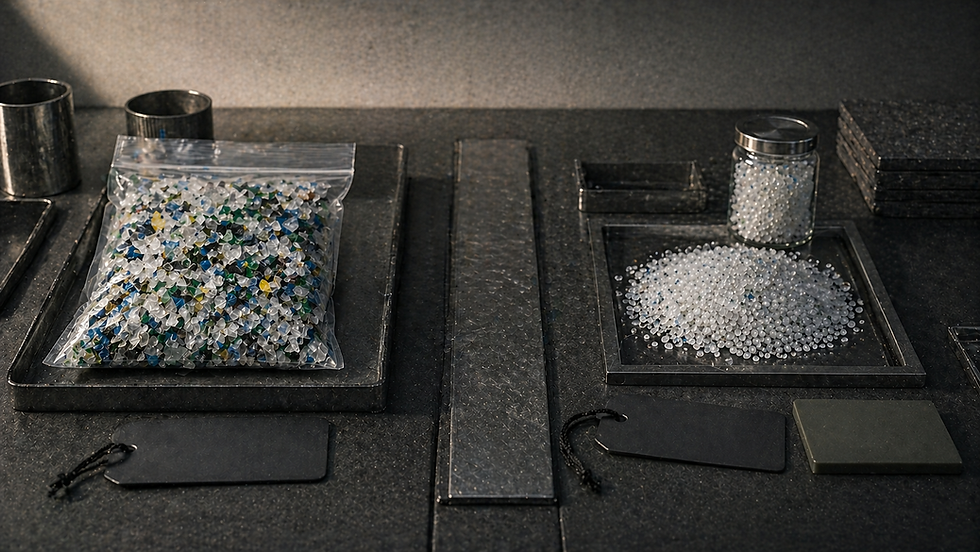
In Brief
Recovered materials are materials that have been captured, collected or diverted from disposal.
Recycled materials are recovered materials that have been processed into a form that can be used again.
The distinction matters because a recovered material is not automatically ready for manufacturing. It may need sorting, cleaning, testing, preparation and traceability before it can become a reliable recycled-content input.
Polyclo Pathway

Recovered Material
Suitable material streams are identified, collected and assessed for manufacturing potential.

Material Preparation
Sorting, cleaning and preparation steps are applied to create consistent, usable inputs.

Quality Control
Material is tested and controlled to meet practical manufacturing requirements.

Recycled-content Product
Prepared material is used to produce new, usable products with defined performance.
Recovered materials vs recycled materials: a simple definition
Recovered materials vs recycled materials.
Recovered materials are materials that have been captured before being lost to disposal.
Recycled materials are materials that have gone through a recycling process and have been converted into a usable form.
The difference is readiness.
A recovered material may still be mixed, contaminated or inconsistent. A recycled material has usually been processed into a more controlled input, although it still needs to be suitable for its intended use.
WA RELEVANCE
Why this matters in Western Australia
Western Australia needs clearer language around recovered and recycled materials, as the distinction affects procurement, reporting and manufacturing pathways.
Recovered material may still require preparation before it can support recycled-content manufacturing. Recycled material also needs clarity on its processing, origin and suitability for use.
For WA businesses, this matters because circular manufacturing depends on material readiness, quality control, pathway design and traceability, not just availability.
This distinction is central to Polyclo’s work in local circular manufacturing infrastructure.
Recovery comes before recycling
Recovery is the first stage in many circular material pathways.
It means the material has been captured, collected, separated or diverted before disposal. That recovery step is important because material cannot be reused, recycled or manufactured into something new if it is not captured in the first place.
But recovery does not automatically mean the material is ready to use.
A recovered material might still include contamination, mixed material types, inconsistent colour, variable quality or handling issues. It may need further work before a manufacturer can use it.
That is why “recovered” should not be treated as a finished material status. It is the start of a possible pathway.
Recycling changes the material’s state
Recycling is the stage where recovered material is processed into a more usable form.
Depending on the material, that process might include sorting, cleaning, shredding, washing, melting, filtering, pelletising, reprocessing or other preparation steps.
The aim is to turn recovered material into a material that can be used again.
For plastics, this might mean recovered plastic is processed into flakes or pellets. For paper, it might mean fibre is recovered and reprocessed. For metals, it might involve sorting and remelting.
The exact process depends on the material and the intended end use.
Recovered materials vs recycled materials in manufacturing
The difference between recovered materials and recycled materials becomes most important when the material is expected to enter manufacturing.
Manufacturing needs controlled inputs.
A recovered material may have potential, but it may not yet have the consistency, cleanliness, documentation or technical properties needed for production.
A recycled material is closer to manufacturing use, but it still needs to be checked against the requirements of the product or process.
This is why recycled-content manufacturing needs more than broad material claims. It needs practical evidence about material source, processing, quality and suitability.
Recycled content is a product claim, not just a material story
Recycled content refers to the amount of recycled material used in a product or packaging format.
That is different from saying a material has simply been recovered.
A product may be made with recycled content only when recycled material has actually been incorporated into that product or input. That distinction matters because recycled-content claims need to be clear, supportable and specific.
APCO’s Recycled Content Guide discusses recycled content in the context of packaging and notes the role of post-consumer recycled content in measurement and targets.
For Polyclo, the broader principle is important: recycled-content claims need a material pathway behind them.
Why the distinction matters for procurement
Procurement teams need to know what they are buying.
A recovered material stream is not the same as a recycled-content product. A recycled input is not the same as a finished product. A product that includes recycled content still needs to meet performance, safety, quality and supply requirements.
Clear language helps buyers ask better questions.
What material was recovered?
How was it processed?
What recycled content is included?
Is the material suitable for the intended use?
What evidence supports the claim?
APCO’s Packaging Sustainability Framework separates recycled content from recoverability, which reinforces the point that being recoverable at end of life and containing recycled material are different concepts.
That distinction helps prevent circular economy language from becoming too broad.
Why this matters for traceability
Traceability helps connect a material’s history with its future use.
For recovered materials, traceability may show where the material came from, how it was captured and how it moved through the recovery system.
For recycled materials, traceability may also need to show how the material was processed, what form it became and how it entered a product or manufacturing pathway.
The more specific the claim, the more important traceability becomes.
If a business wants to claim recycled content, it needs more than a general statement that the material was recovered. It needs evidence that recycled material was used in the relevant product or input.
This is why traceability needs to be built into circular manufacturing pathways early.
Material readiness affects product development
Recovered materials can be promising but variable.
A material may be technically recoverable but still unsuitable for a particular recycled-content product. It may need further sorting, processing or blending. It may also require product design changes or manufacturing trials.
Recycled materials may be more prepared, but they are not automatically suitable for every application.
For example, a recycled polymer input may work for one product pathway but not another. Suitability depends on properties, consistency, contamination, processing behaviour and the performance requirements of the intended product.
This is why Polyclo uses careful development-stage language around material pathways. The aim is to build capability around suitable recovered material streams, not to imply every recovered material can become a finished product.
Why recycled materials still need markets
A recycled material still needs demand.
Processing material into a recycled input is valuable only when that input has a practical use. Without demand, recycled material can still struggle to hold value or move into consistent production.
The Australian Government’s plastics recycling material refers to national packaging targets that include both plastic packaging recycling and average recycled content in packaging.
That pairing matters. Recycling and recycled content are connected, but they are not the same outcome.
Recycling produces or prepares material. Recycled content uses that material in a product or packaging format.
Circular manufacturing is where those pieces are connected through practical production pathways.
Why terminology affects circular economy outcomes
Loose terminology can create confusion.
If a recovered material is called recycled too early, customers may assume it has been fully processed or used again. If a recyclable product is described as circular, people may assume the material already has a working recovery and manufacturing pathway.
These distinctions affect trust.
They also affect investment, procurement and reporting. Clear language helps identify the real stage of the pathway and the work still needed to create a useful outcome.
The Australian Government’s National Plastics Plan highlights the importance of better data on plastic volumes, value and movement through the economy to support effective decision-making.
That same idea applies here. Better language supports better decisions.
How Polyclo uses these terms
Polyclo uses “recovered materials” to describe suitable material streams that may be captured or diverted and may have potential for further use.
Polyclo uses “recycled-content products” to describe future product pathways where recycled material has been incorporated into a commercially useful output, subject to validation and market readiness.
The difference matters because Polyclo is still in development.
The project is building capability around recovered-material pathways, local manufacturing infrastructure, traceability and future recycled-content manufacturing.
It is not about claiming that every recovered material is already recycled, or that every recycled material is ready for every product pathway.
Learn more about Polyclo’s development direction on the About Polyclo page.
Common questions about recovered and recycled materials
Are recovered materials the same as recycled materials?
No. Recovered materials have been captured or diverted from disposal.
Recycled materials have been processed into a form that can be used again.
Can recovered materials become recycled materials?
Yes. Recovered materials can become recycled materials when they are processed into a usable form.
That may require sorting, cleaning, separation, reprocessing, testing and quality control.
Does recycled material always mean recycled content?
No. Recycled material is an input.
Recycled content refers to that material being used within a product or packaging format. A material can be recycled without yet being incorporated into a final product.
Why does this difference matter for claims?
The difference matters because customers, procurement teams and regulators need clear language.
A claim about recovered material is different from a claim about recycled material or recycled content. Each claim needs evidence that matches what is being stated.
The practical takeaway
Recovered materials and recycled materials are connected, but they are not interchangeable.
Recovery captures material.
Recycling processes it into a usable form.
Recycled content uses that processed material in a product or manufacturing pathway.
For Western Australia, the opportunity is to build local circular manufacturing capability that connects these stages more clearly.
Read more Polyclo Insights on recovered materials, traceability and circular manufacturing.
What Polyclo is developing
Polyclo is developing Western Australian circular manufacturing capability that connects suitable recovered material streams to practical manufacturing pathways.

Connect with Polyclo
Contact Polyclo to learn more about the project, our development pathway and local circular manufacturing capability in Western Australia.


Comments