
What is circular manufacturing?

Industry Insight - Circular Manufacturing

In Brief
Circular manufacturing is a manufacturing approach that keeps suitable recovered materials in productive use for longer.
It is different from recycling alone. Recycling focuses on recovering material. Circular manufacturing focuses on what happens next: preparation, quality control, traceability, production and commercial use.
For Western Australia, circular manufacturing matters because local capability can help connect material recovery with practical recycled-content product pathways.
Polyclo Pathway

Recovered Material
Suitable material streams are identified, collected and assessed for manufacturing potential.

Material Preparation
Sorting, cleaning and preparation steps are applied to create consistent, usable inputs.

Quality Control
Material is tested and controlled to meet practical manufacturing requirements.

Recycled-content Product
Prepared material is used to produce new, usable products with defined performance.
A simple definition of circular manufacturing
Circular manufacturing means designing and operating manufacturing systems so materials can be kept in productive use for longer.
In a traditional linear model, materials are extracted, made into products, used and then discarded. Circular manufacturing works against that pattern by connecting recovered materials back into useful production pathways.
That does not mean every material can be used again. It also does not mean recycling automatically creates a circular economy.
For a recovered material to become a manufacturing input, it usually needs to meet practical requirements. It may need sorting, preparation, contamination control, quality checks, technical validation and a clear end use.
WA RELEVANCE
Why this matters in Western Australia
Western Australia needs practical local pathways between material recovery and manufacturing.
When recovered materials do not have suitable local manufacturing options, they may need to move long distances, lose traceability or depend on markets outside WA.
Local circular manufacturing capability can help create stronger links between recovered materials, recycled-content production, procurement needs and future reporting. This is one reason Polyclo is developing Western Australian circular manufacturing infrastructure.
Circular manufacturing starts after recovery
Recovering material is important, but recovery is not the same as circular manufacturing.
A recovered material still needs somewhere useful to go. It may need preparation, testing, sorting or further processing before it can become a reliable manufacturing input.
This is where circular manufacturing becomes useful. It connects the recovery system with the production system.
A material can be collected and recycled, but still have limited value if there is no reliable manufacturing pathway for it. Circular manufacturing focuses on closing that gap.
How circular manufacturing differs from recycling
Recycling is one part of the circular manufacturing pathway, but the two terms are not the same.
Recycling usually refers to recovering material so it can be processed or used again. Circular manufacturing goes further by asking whether that recovered material can become part of a new production system.
The difference is what happens after recovery.
Circular manufacturing connects material recovery with product design, production requirements, customer demand, traceability and reporting discipline.
This is consistent with the broader direction of Australia’s Circular Economy Framework [Click here], which places circular economy work beyond disposal and into resource use, productivity and system-level change.
The main steps in a circular manufacturing pathway
1. Suitable recovered materials
The starting point is material suitability.
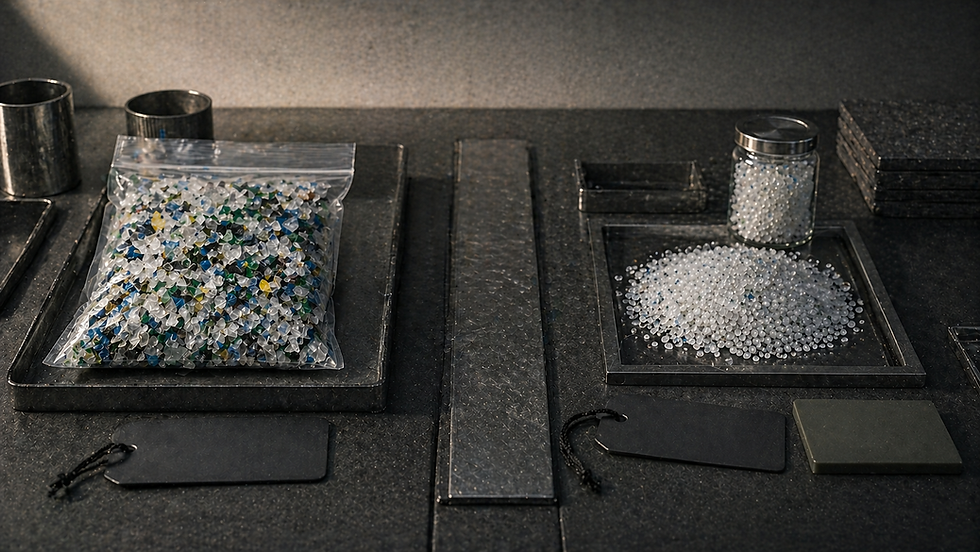
Recovered materials need to be stable enough, clean enough and technically appropriate for their intended use. If a material stream is too mixed, contaminated or inconsistent, it may not be suitable for a manufacturing pathway without further preparation.
This is why circular manufacturing starts with evidence, not assumptions.
2. Material preparation
Recovered materials often need to be prepared before they can move into manufacturing.
That preparation may include sorting, cleaning, size reduction, separation, drying, testing or other steps depending on the material and intended use.
The goal is to move from “waste material” to “controlled input”.
3. Quality control
Manufacturing depends on consistency.
Circular manufacturing needs quality checks that help confirm whether recovered material is suitable for a particular process or product pathway. Without quality control, recycled-content manufacturing becomes harder to scale and harder to trust.
This is especially important for commercial and industrial customers, where product performance, supply reliability and specification control matter.
4. Recycled-content production
Once a material is prepared and validated, it may be suitable for recycled-content manufacturing.
This can include new products, components, materials or intermediate inputs. The exact pathway depends on the material type, processing method, product requirements and market demand.
The important point is that circular manufacturing creates a practical use for recovered material, rather than treating recovery as the final outcome.
5. Traceability and reporting
Traceability helps support confidence.
Businesses increasingly need to understand where materials come from, how they are processed and what recycled-content claims can be supported. Circular manufacturing systems need to produce better information, not just better products.
This is one of the reasons Polyclo is being developed with traceability and reporting discipline in mind. Learn more about Polyclo’s development direction on the About Polyclo page [Click Here].

Why circular manufacturing matters
Circular manufacturing matters because material recovery only creates lasting value when there is a pathway for the material to be used again.
A strong circular manufacturing system can help create demand for recovered materials. It can also support local supply chains, reduce reliance on virgin inputs where technically and commercially appropriate, and give businesses more practical ways to use recycled content.
For customers, the value is not just environmental language. It is access to materials and products that are useful, traceable and aligned with real procurement needs.
For industry, the value is capability. Local circular manufacturing can help turn waste and recovery discussions into practical production pathways.
CSIRO’s circular economy research [Click here] also reinforces the importance of system-level thinking, where material recovery, product design, supply chains and industry capability need to work together.
What circular manufacturing is not
Circular manufacturing is not a slogan.
It is not the same as putting a recycling symbol on a product. It is not the same as collecting material without a clear next use. It is not a claim that all waste can become high-value products.
It also should not be confused with generic sustainability marketing.
Good circular manufacturing depends on material quality, process control, commercial demand and honest reporting. If those pieces are missing, circular economy language can become vague very quickly.
That is why Polyclo’s approach is careful. The focus is on building capability, validating pathways and communicating clearly as the project develops.
How Polyclo fits into circular manufacturing
Polyclo is being developed as a Western Australian circular manufacturing business.
The focus is on suitable recovered material streams, recycled-content manufacturing pathways, traceability and practical circular economy outcomes for future industrial and commercial use.
Common questions about circular manufacturing
Is circular manufacturing the same as recycling?
No. Recycling is part of the circular manufacturing pathway, but it is not the whole pathway.
Recycling focuses on recovering material. Circular manufacturing focuses on preparing, validating and using suitable recovered materials in new production systems.
Does circular manufacturing mean everything can be made from recycled materials?
No. Material suitability matters.
Some materials can be recovered but may not be suitable for a particular manufacturing process or product. Circular manufacturing depends on quality, consistency, technical requirements and market demand.
Why does traceability matter?
Traceability helps support confidence in recycled-content claims.
It gives businesses a clearer understanding of where material has come from, how it has been handled and what can be reported responsibly. That is important for customers, procurement teams and circular economy projects that need evidence behind their claims.
The practical idea behind circular manufacturing
Circular manufacturing is about keeping useful materials in productive use for longer.
It connects recovered materials with preparation, quality control, production, traceability and commercial demand.
For Western Australia, the opportunity is to build more local capability so suitable recovered materials can move into practical recycled-content pathways.
That is the space Polyclo is working toward: circular manufacturing infrastructure that supports recovered materials, local manufacturing capability and credible recycled-content outcomes as the project develops.
What Polyclo is developing
Polyclo is developing Western Australian circular manufacturing capability that connects suitable recovered material streams to practical manufacturing pathways.

Connect with Polyclo
Contact Polyclo to learn more about the project, our development pathway and local circular manufacturing capability in Western Australia.


Comments